



Hey everyone!
This month we answered the questions we get the most: how does a biotech get reviewed in Montana, and who treats the patient afterward?
You’ll also find two podcast episodes on pre-approval access and right to try. And a chance to book a call with Steve from our team if you’re a biotech looking for a way to reach patients after Phase 1.
Keep reading to get all the details ↓
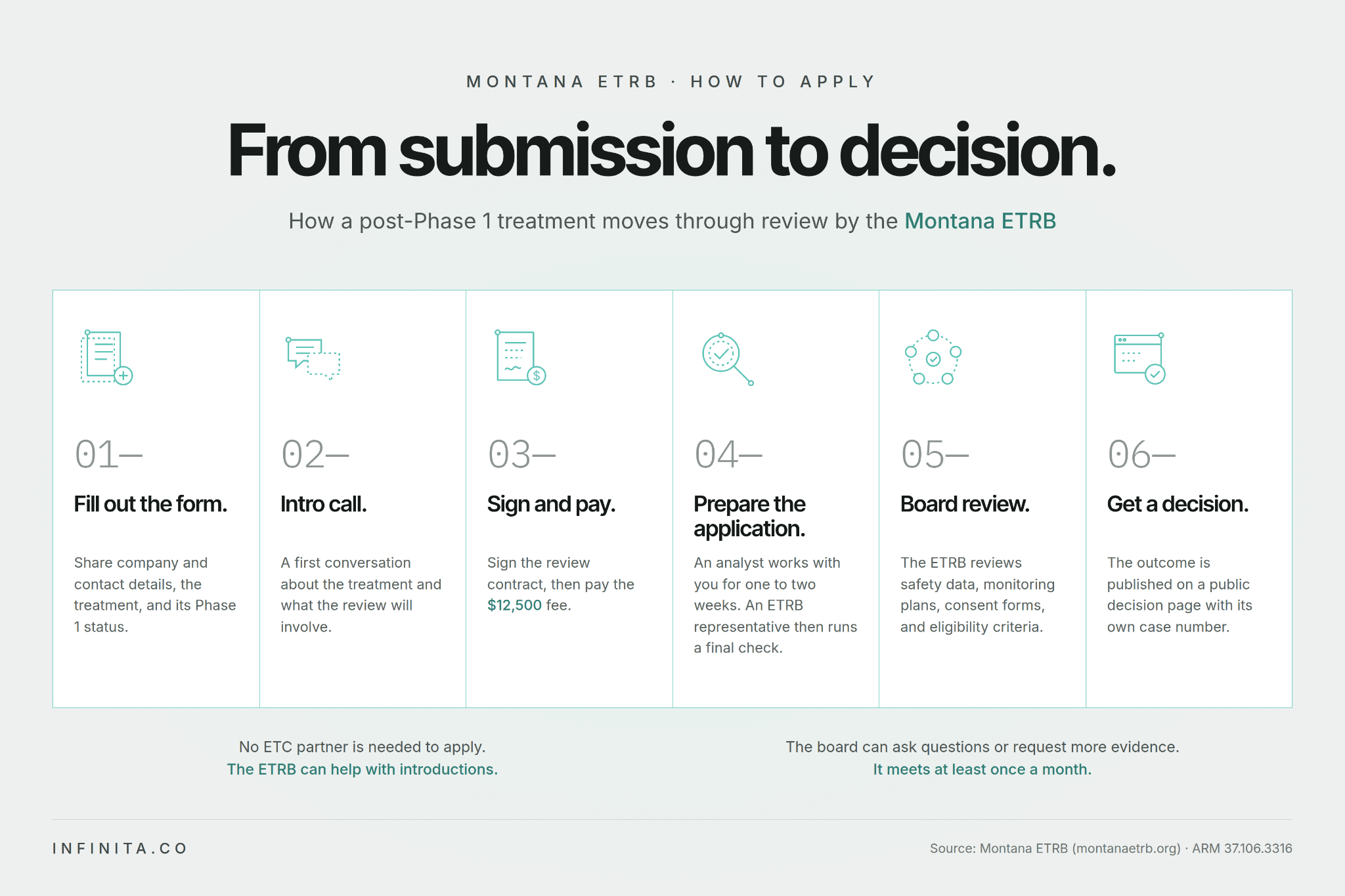
Where Do You Start If You Want to Offer your Post-Phase 1 Treatment to Patients in Montana?
The first step is a review by the Montana ETRB.
Companies start by filling out a submission form on the ETRB website, followed by an intro call with the team. From there, an analyst helps them prepare the application, and once it’s ready, the full board reviews the safety data, monitoring plans, and consent forms.
When the board reaches a decision, it’s published on a public page, so companies can easily share it with partners and clinicians.
You can already see it in practice: the first decision under SB 535, for Parley Neurotech’s combination therapy, was approved with conditions in August.
ETC vs. ETRB: Who Does What?
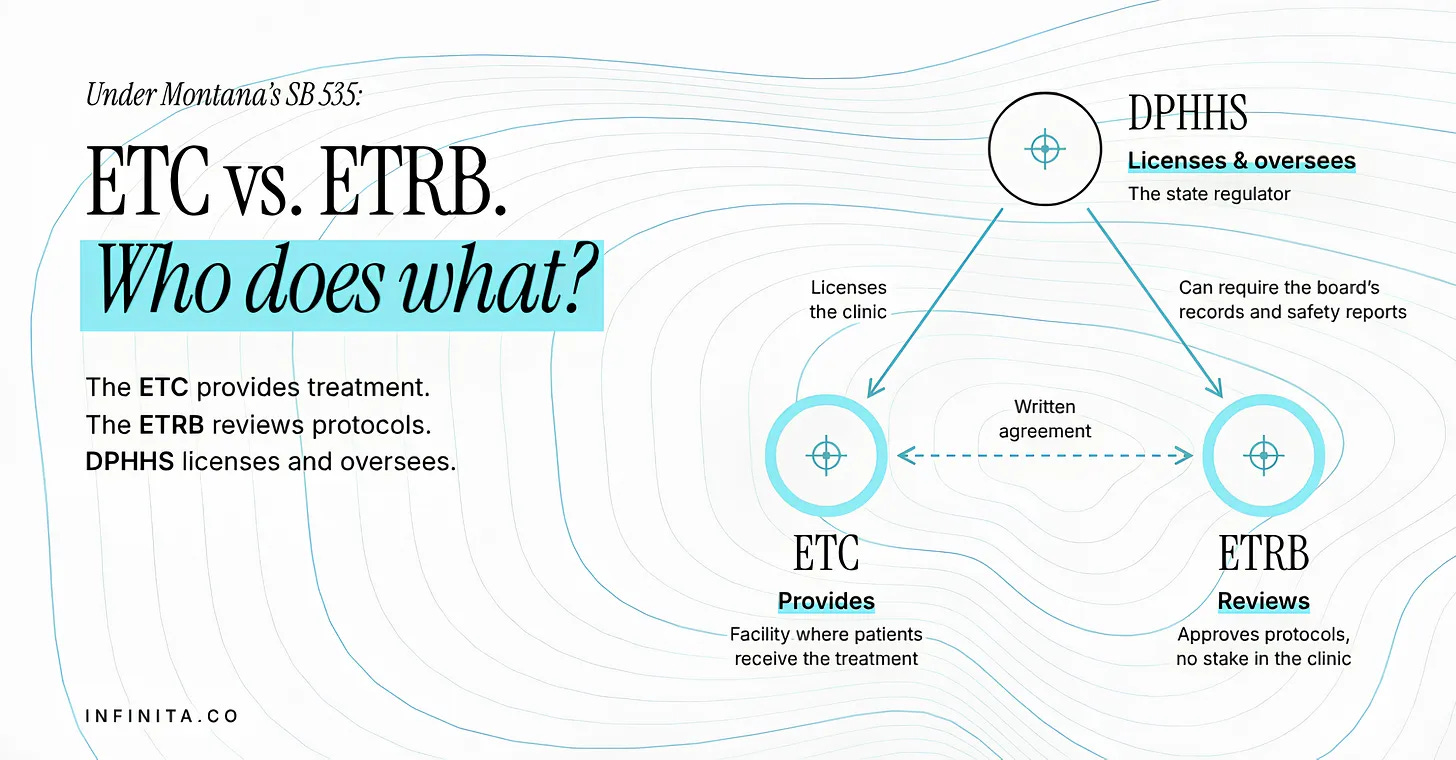
Once a treatment is approved, who actually gives it to the patient? And who makes sure it’s safe to offer?
Under Montana’s SB 535, those are two separate jobs.
The Experimental Treatment Center (ETC) is the licensed clinic where treatment happens, while the Experimental Treatment Review Board (ETRB) doesn’t treat anyone. It reviews treatment protocols for safety and informed consent, and every ETC has to work with one before it can treat patients.
And above both sits the state health department (DPHHS), which licenses the clinics and oversees the whole system.
Highlights From This Month’s Podcast Episodes
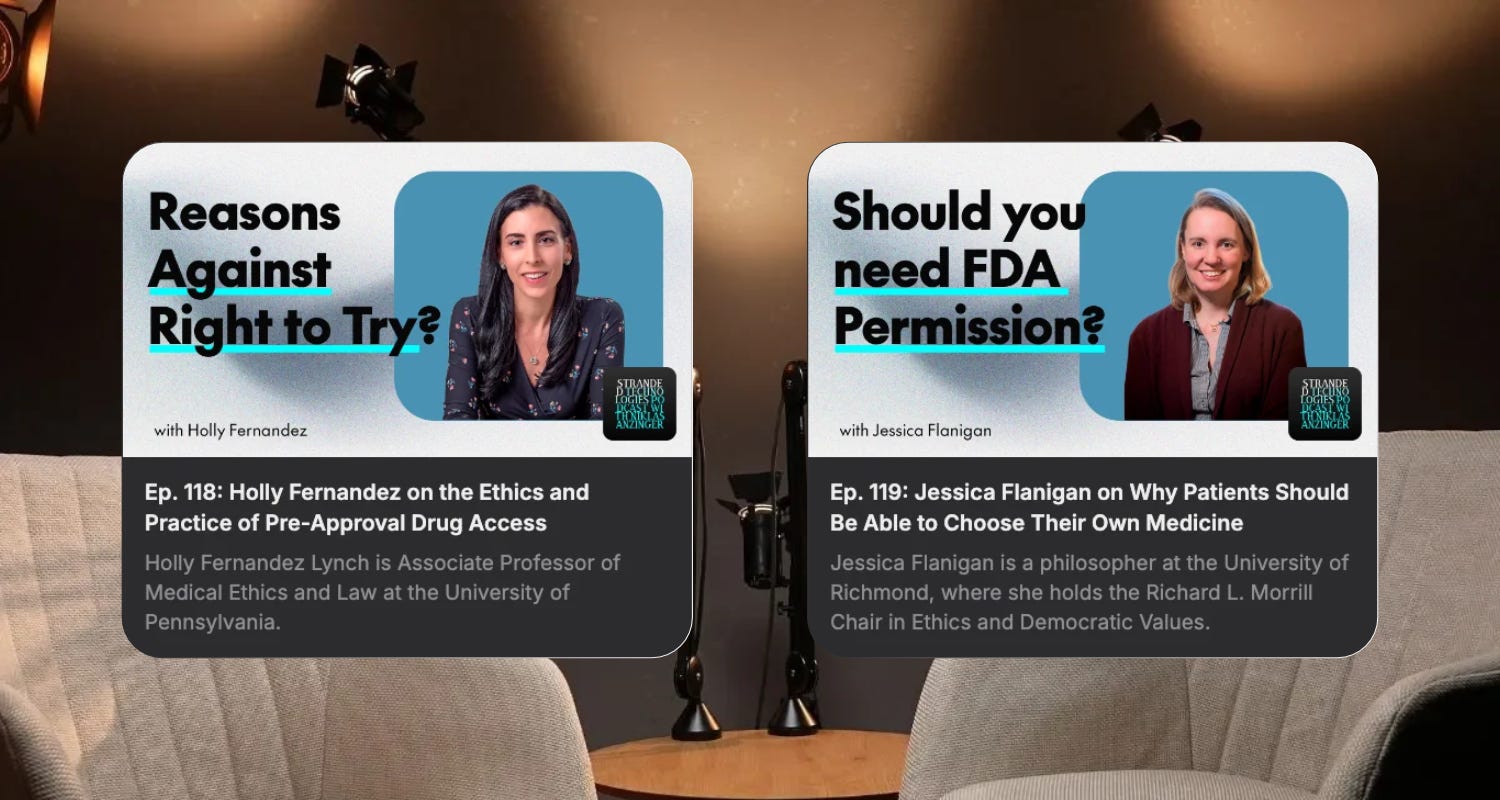
In Episode 118, Holly Fernandez Lynch, Associate Professor of Medical Ethics and Law at the University of Pennsylvania and an opponent of the 2017 federal Right to Try act, joins Niklas to debate Montana’s approach. They get into:
Whether completing Phase 1 is enough protection against snake oil
How paying for an unapproved treatment compares to paying research participants
Whether the data it generates could count as real evidence
In Episode 119, Jess Flanigan, philosopher at the University of Richmond and author of Pharmaceutical Freedom, makes the case that patients should have the right to choose their own medicines, not only refuse them. Key ideas from this episode:
Why patients should be able to choose, not only refuse
What this could mean for the FDA
What it could mean for clinical trials
If You’re a Biotech Past Phase 1 Looking for a Way to Reach Patients, Talk to Our Team!
Under Montana’s 2025 law, treatments that have completed Phase 1 can be offered to patients at licensed Experimental Treatment Centers while trials continue.
That means patients get access years earlier, and your company starts building real-world evidence and clinical relationships now, instead of waiting for approval.
Steve works directly with biotechs on eligibility and next steps. Book a call to see if the pathway fits ↓
And that’s a wrap on October!
Before you go, here are three things you might find interesting!
The Biotech Catch-22: You Need Data to Raise Money, and Money to Generate Data
Running a clinic? Grants cover the $10,000 ETC license fee for the first five approved clinics
Follow along
X · YouTube · LinkedIn
See ya in November,
Nelsi ;)