



In a recent episode of the Stranded Technologies Podcast, Holly Fernandez Lynch, Associate Professor of Medical Ethics and Law at the University of Pennsylvania and one of the most influential voices in U.S. bioethics on clinical trial ethics and patient access, joined us to talk about how patients can access treatments before FDA approval. The conversation raised a question that's hard to answer:
If most patients can’t get into a clinical trial, how are they supposed to reach a treatment that could help them?
First, the problem no one talks about enough
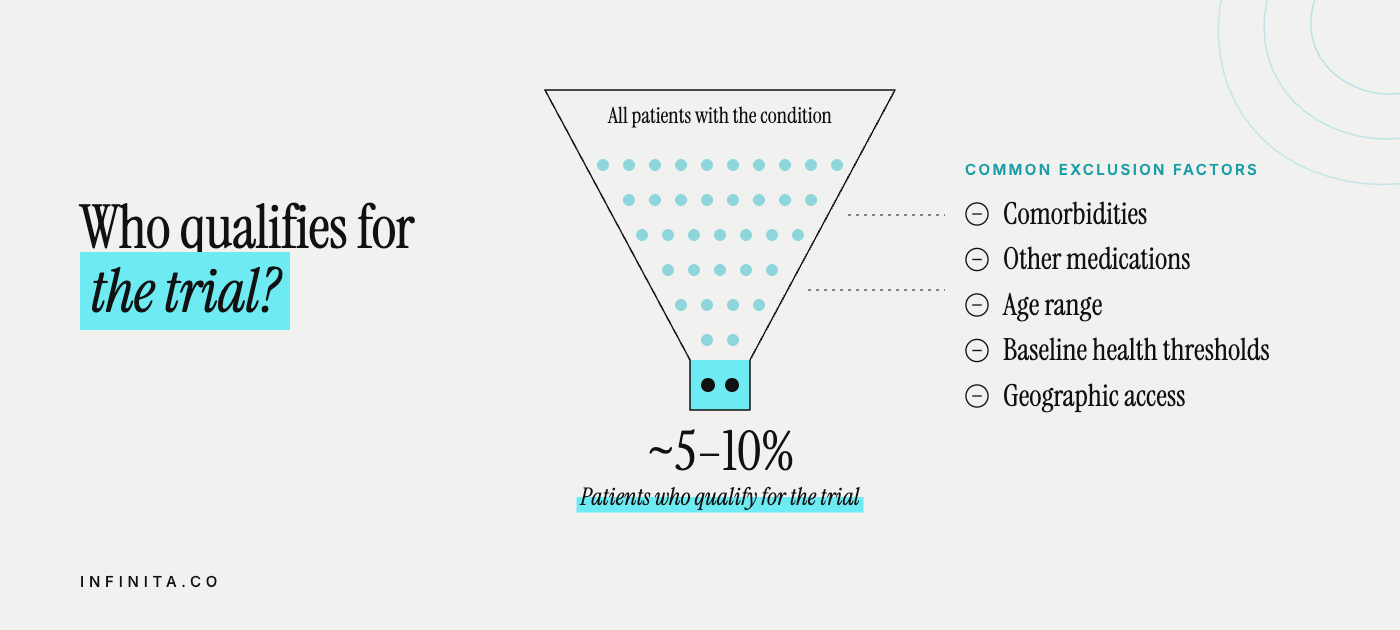
Most patients never get into a clinical trial.
The exclusion criteria alone, things like comorbidities, prior medications, lung function cutoffs, baseline health thresholds, filter out an estimated 90 to 95 percent of the patient population.
The ones who do get in?
They tend to be healthier, more homogeneous, and easier to study. That’s good for isolating a drug’s signal in the data. It’s less good for everyone else.
So what happens to the drugs that get approved based on that narrow group?
They often don’t perform the same way in the real world.
This is called the efficacy-effectiveness gap:
→ Efficacy = how a drug performs under clinical trial conditions (controlled dosing, selected patients, close monitoring)
→ Effectiveness = how it performs in real life (patients with comorbidities, mixed adherence, less monitoring)
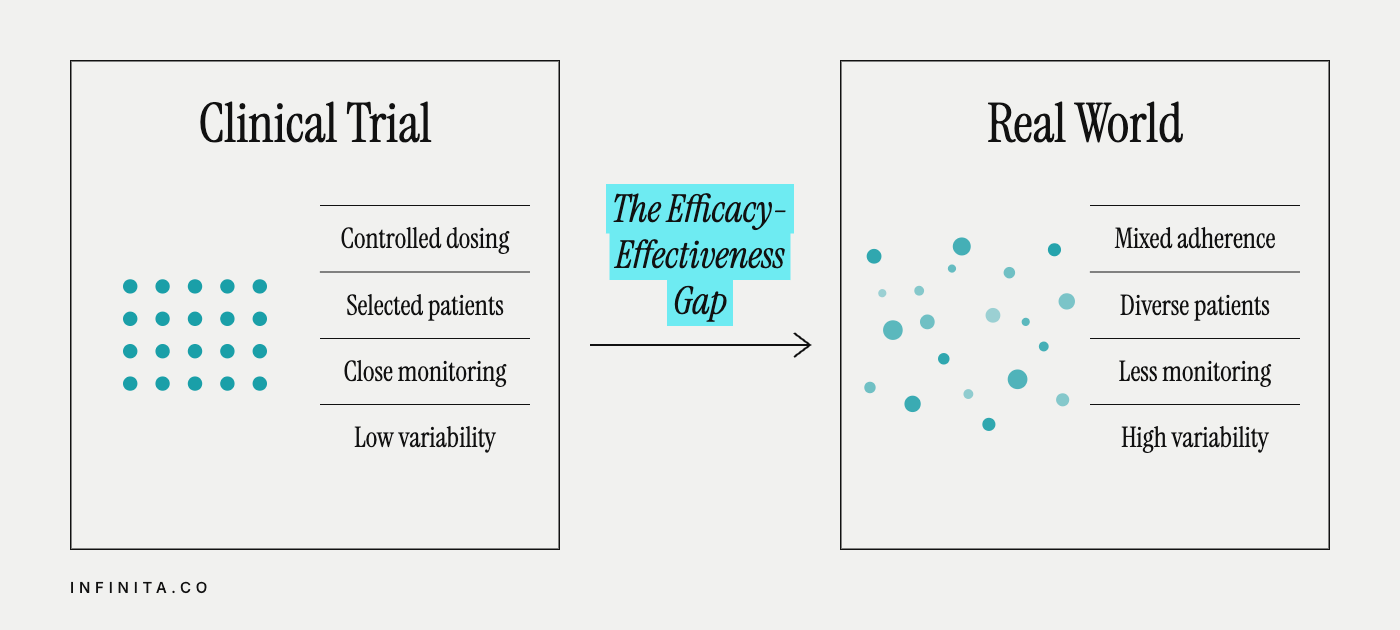
Research published in Nature Reviews Drug Discovery has found that non-responder rates for approved drugs can run as high as 30 to 60 percent. The gap isn’t a flaw in the drug. It’s a flaw in how narrowly it is tested.
The expanded access pathway and its limits
For patients who can’t get into trials, the U.S. has had an expanded access pathway since the late 1980s, born from HIV/AIDS patient advocates who told the FDA: you are protecting us to death.
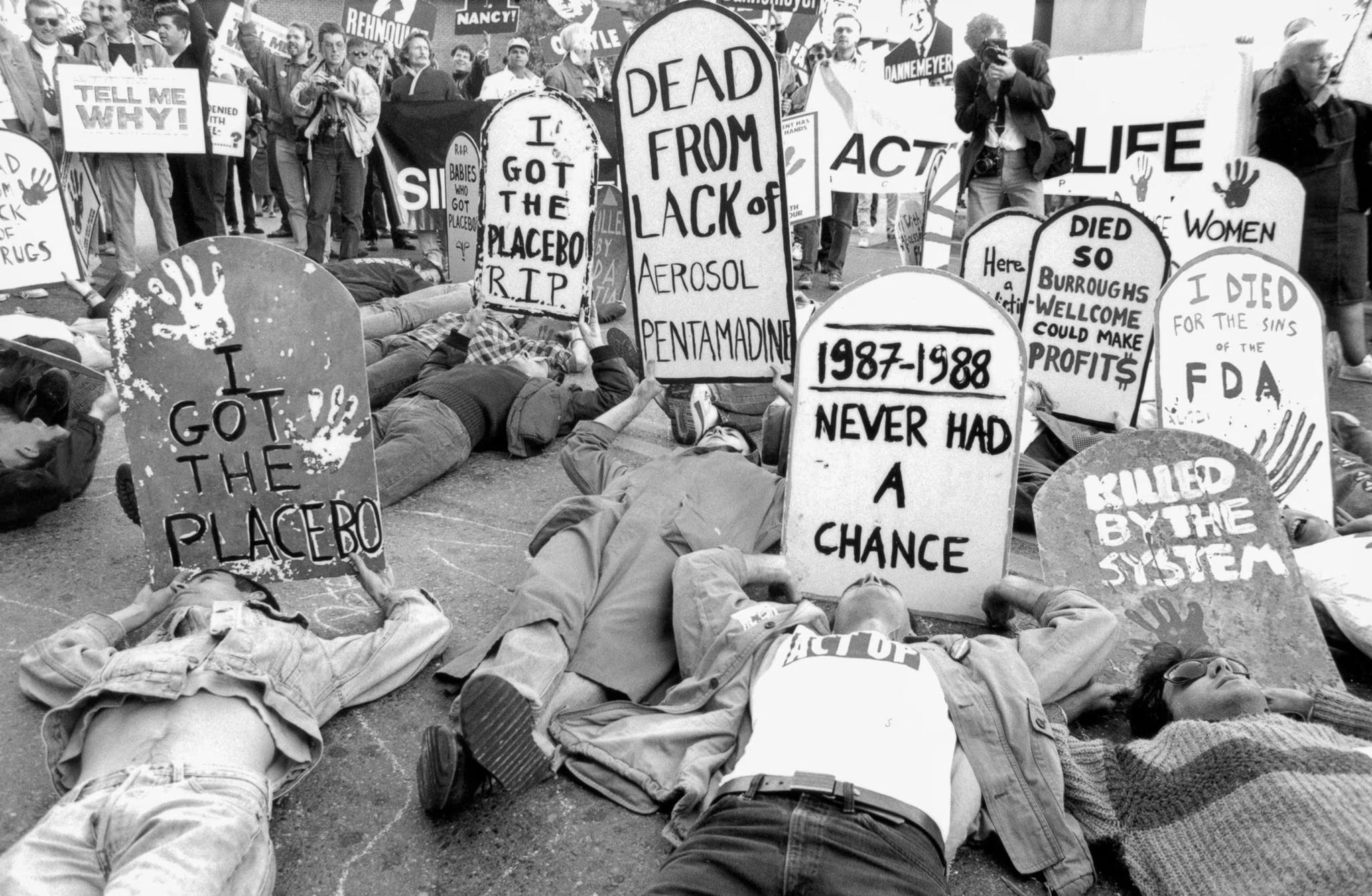
It allows seriously ill patients to try investigational products outside of trials, provided:
→ Their doctor agrees → The sponsor agrees → The FDA authorizes it
The FDA approves nearly all requests it receives. The bottleneck isn’t the FDA.
Companies often say no, not because the drug is unsafe, but because these patients are seen as a risk to the data. They might complicate the regulatory submission. So the patients with the most to gain are often the ones with the least access.
From Right to Try to Montana
Federal Right to Try, signed into law in 2018, tried to fix this by removing FDA from the equation entirely. Patients, doctors, and companies could agree directly.
It hasn’t delivered.
→ Public reporting requirements are weak → No company has used right-to-try data to support an FDA marketing application → We still can’t tell how many patients have actually gained access through it
Montana’s SB 535 is trying something structurally different.
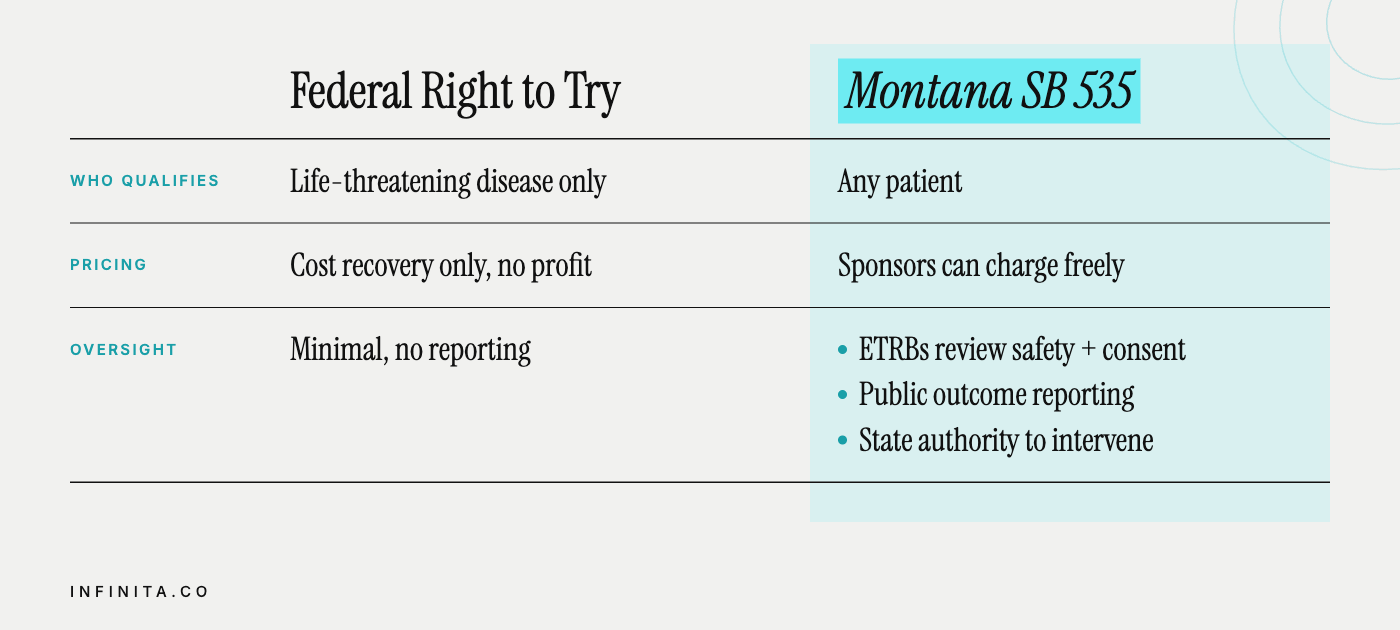
The ETRBs (Experimental Treatment Review Boards) are modeled loosely on IRBs.
They don’t evaluate whether a treatment will work. They evaluate whether it’s safe enough to try, whether patients are adequately informed, and they require something neither expanded access nor federal right to try demand at this level: public reporting of outcomes and adverse events.
A solution worth watching
Montana’s framework is one of the first structured attempts to bridge that gap.
Under SB 535, an independent board of physicians, scientists, and ethicists reviews experimental treatments for safety, monitoring protocols, and informed consent before any patient receives them.
To learn more about how the review process works, who sits on the board, and what treatments are eligible, visit montanaetrb.org.
Holly Fernandez Lynch joined Niklas Anzinger on the Stranded Technologies Podcast to discuss the ethics and practice of pre-approval drug access. Listen to the full episode here.